Key Takeaways
- Titans is Google's new memory architecture that learns in real-time, functioning like a human's long-term memory.
- Miris is a unified framework that explains and improves upon sequence models like Transformers and Mamba.
- Lux is a new computer-use agent that outperforms Claude and Operator in automating complex UI tasks.
- Gemini is now growing faster than ChatGPT, driven by Android integration and new models like Nano Banana.
Google’s Titans Just Solved AI’s Biggest Weakness, But…
🧠 Introduction: The Week Google Quietly Changed AI Forever
Google has been firing off updates at lightning speed—but this week was different. Instead of releasing one big model, they updated almost every layer of the AI stack:
- Titans: a breakthrough long-term memory architecture
- Miris: a unified theory of sequence models
- Lux: a new computer-use agent beating Gemini, Operator & Claude
- Nano Banana 2 Flash: a cheaper, near-Pro image generation model
- AI-rewritten headlines test: controversial but strategic
- Gemini user growth: now rising faster than ChatGPT
[!IMPORTANT] OpenAI responded with a Code Red internally.
This article breaks down everything—simply, accurately, and in a way real users understand.
🏛️ 1. Titans — Google’s Answer to Transformer Limits
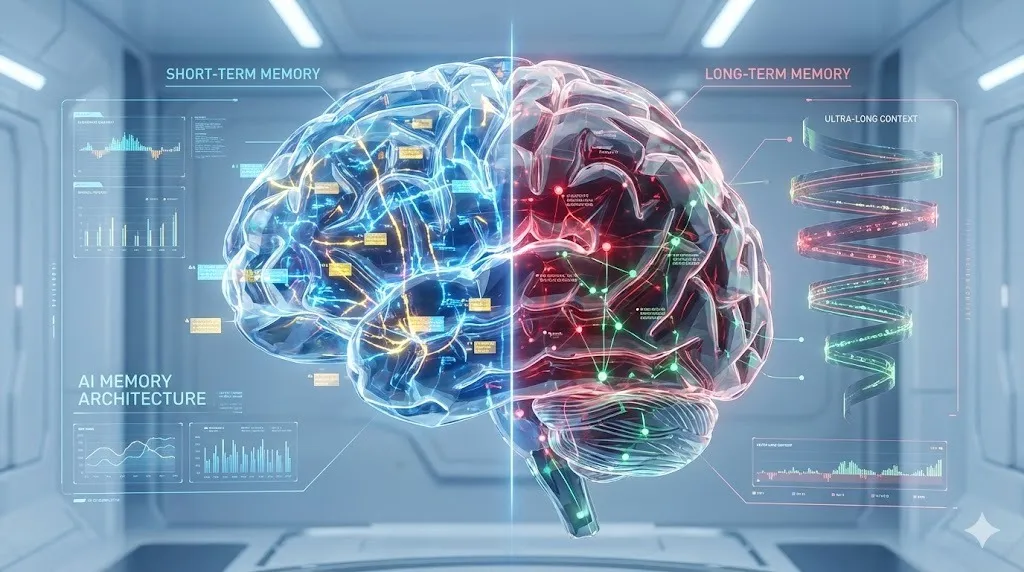
Transformers are amazing—but they fail on truly long contexts. Computation explodes. Memory collapses. Accuracy drops.
Titans fixes this with a dual-memory architecture:
🎯 Short-Term Memory → Windowed Attention
Precise. High-resolution. Perfect for recent context.
🧠 Long-Term Memory → Updated Continuously
This is the breakthrough. Unlike normal LLMs:
- It learns during use
- Stores only “surprising” information
- Forgets intelligently
- Adapts its memory while generating
📌 Why Titans Is Important
Because today’s LLMs don’t learn on the fly.
Titans might be the first architecture that acts like a human with:
- Working memory (short-term)
- Life-long memory (long-term)
📊 Titans’ Benchmark Dominance
Titans crushed:
- GPT-4 Recurrent
- Gemma 9B
- Llama 3.1 70B
- Even Llama paired with retrieval tools
Its memory-as-context model handled over 2M tokens.
This is the beginning of post-Transformer AI.
🧬 2. Miris — Google’s Unified Theory of Memory Models
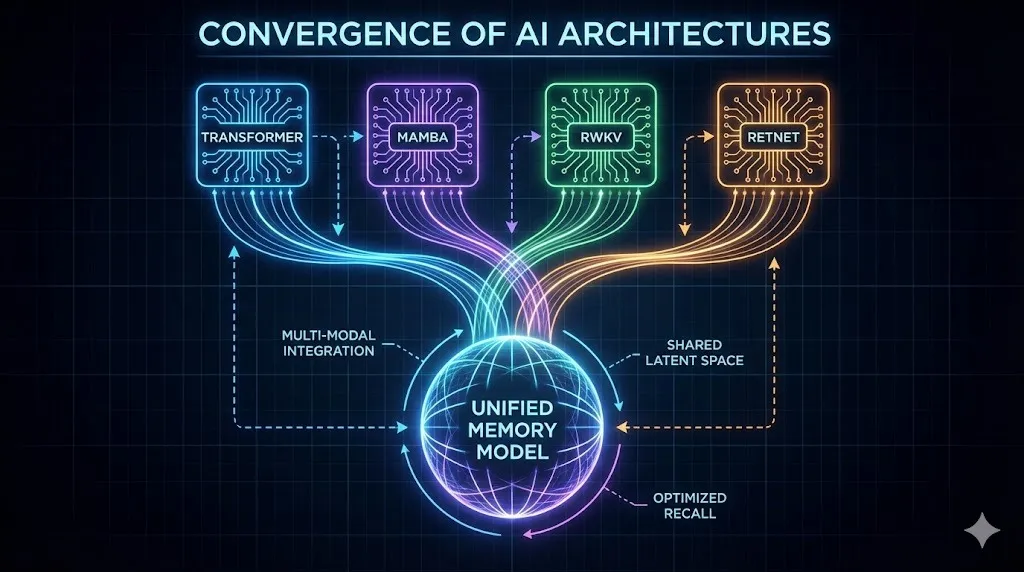
Miris is not a single model—it’s a framework explaining:
- Transformers
- Mamba
- RWKV
- RetNet
- DeltaNet
All are just different answers to four questions:
- How is memory shaped?
- What gets stored?
- How fast does memory decay?
- How does memory update?
This framework produced three new families:
- 🔹 Moneta
- 🔹 Yad
- 🔹 Mamora
Some of these outperform Mamba-2 in ultra-long tasks.
🍒 The Big Idea
Miris gives Google a roadmap to build:
- Models that learn continuously
- Models that reason like teenagers (Ilia’s words)
- Models that don’t depend on enormous static datasets
This is huge.
🖥️ 3. Lux — The Computer-Use Agent That Just Changed Everything
While Google was overhauling architecture, the Open AGI Foundation dropped something shocking:
⚡ Lux: The New King of Computer-Use Agents
Lux isn’t a chatbot. It’s not a browser automation plugin. It’s not “Operator lite.”
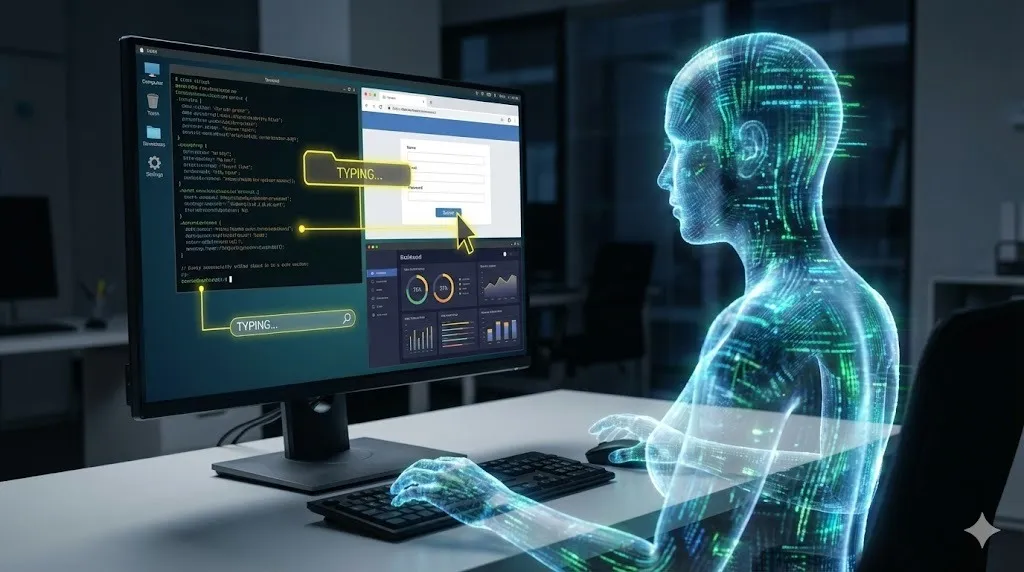
Lux uses a computer like a human:
- Reads the screen
- Clicks
- Scrolls
- Types
- Follows UI elements
- Performs tasks across OS, browser, spreadsheets, emails
📈 Benchmarks: Lux vs the World
A massive gap.
🎮 Why It Wins
Lux has 3 modes:
- Actor Mode – fast steps (1 second/step)
- Thinker Mode – plans multi-step tasks
- Tasker Mode – executes deterministic instructions with retries
🧪 Agentic Active Pre-Training
Lux learns by acting, not reading logs.
OS-Gym can generate:
- 1000+ OS replicas
- 1400 interaction trajectories per minute
This gives Lux intuition about computers—something NO model had before.
🍌 4. Nano Banana 2 Flash — Same Pro Quality, Lower Cost
Google is preparing to launch:
Nano Banana 2 Flash — an ultra-cheap, ultra-fast version of the Nano Banana 2 Pro image model.
Early signals show:
- Nearly Pro-level performance
- Much lower compute cost
- Ideal for high-frequency workloads
Nano Banana is powering Gemini’s growth, especially among younger users using it for:
- Aesthetic images
- Daily creativity
- Quick edits and remixes
Flash will supercharge this further.
📰 5. Google Is Quietly Rewriting Headlines Using AI (And It’s Causing Chaos)
Users noticed Discover feed headlines being rewritten:
- Sometimes oversimplified
- Sometimes misleading
- Sometimes completely wrong
Examples include:
- “Players clone in-game children” → rewritten as “BG3 players exploit children”
- “Price not announced” → rewritten as “Price revealed”
[!CAUTION] Newsrooms are furious. Users are confused.
Google calls it a “small UI experiment.”
But the real story is: Google is testing AI-optimized headlines for user engagement.
Expect this to evolve into:
- AI-driven summarization
- Dynamic rewriting based on user interests
- Personalized titles
News publishers won’t love it.
📊 6. Gemini Is Growing Faster Than ChatGPT — Here Are the Real Numbers
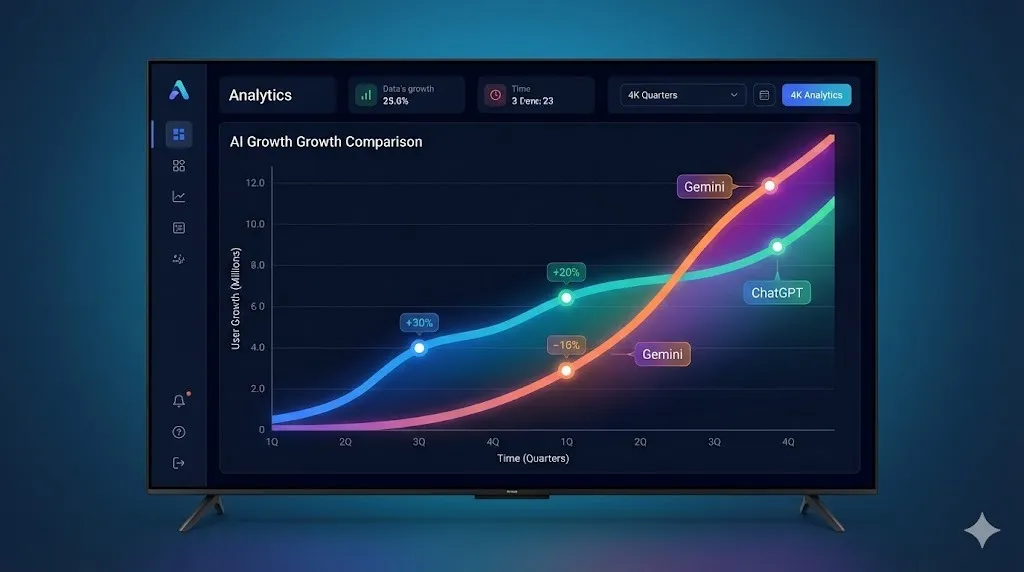
Sensor Tower’s new report shows the shift clearly:
📥 Downloads (YoY)
- Gemini: +190%
- Claude: +190%
- Perplexity: +215%
- ChatGPT: +85%
For a deeper dive into how ChatGPT compares to other models, check out our analysis on Stop Using ChatGPT?.
👥 Monthly Active Users (MAUs)
- ChatGPT → 55% share
- Gemini → 30% growth in 3 months
- ChatGPT → only 6% growth
📱 Engagement Time
- Gemini: 11 minutes/day (+120% since March)
- ChatGPT: +6%
Why?
Because of:
- Nano Banana model
- Gemini built into Android
- Default ecosystem advantage
In India, Gemini’s adoption is exploding because of Android dominance. Make sure you are using the best prompts with our Master Prompt Engineering Guide.
🔥 7. OpenAI’s “Code Red” & the New Garlic Model
After seeing Gemini’s acceleration, Sam Altman issued a code red:
- Pause advertising experiments
- Focus entirely on core product upgrades
- Accelerate personalization
- Improve reliability
- Improve reasoning
- Improve image generation
And most importantly:
🧄 OpenAI is building a new model codenamed Garlic
Insiders say:
- Designed to beat Gemini 3
- Focus on coding & reasoning
- Expected release Q1–Q2 2025
The race is officially back on.
🧩 Conclusion: 2025 Is Becoming the Most Important Year in AI History
This week alone:
- Google rewrote the rules of model architecture
- A new agent (Lux) beat everyone
- Gemini began outgrowing ChatGPT
- OpenAI entered emergency mode
- Long-term memory systems reached real-world feasibility
The AI landscape is shifting faster than ever—and the winners will be those who can adapt. This reinforces the broader Agentic Shift we are seeing across the industry.
❓ Frequently Asked Questions (FAQ)
What is Google’s Titans Memory?
Titans is a new neural memory architecture from Google DeepMind that introduces a persistent long-term memory module. Unlike standard Transformers that forget context once it leaves the context window, Titans can “learn” and store surprising information indefinitely, similar to how human memory works.
How does the Miris framework work?
Miris is a “User Guide” for sequence models. It provides a mathematical framework that unifies different architectures like Transformers, Mamba, and RWKV. By answering four key questions—Memory Shape, Information Storage, Memory Decay, and Update Mechanisms—it allows researchers to build better, more efficient models that learn continuously.
Is Lux better than Claude for computer use?
Yes, in recent benchmarks, the Lux agent significantly outperformed standard computer-use models like Claude. Lux uses “Agentic Active Pre-Training,” meaning it learned by practicing on thousands of simulated operating systems rather than just watching videos, giving it a deeper intuition for how UIs respond to clicks and typing.
When will Gemini 3 be released?
While no official date is set, the release of the “Garlic” codenamed project from OpenAI suggests a competitive release window in Q1–Q2 2025. Google’s rapid updates to the entire stack (Titans, Miris, Lux) indicate Gemini 3’s infrastructure is already being deployed.
Written by Simple AI Guide Team
We are a team of AI enthusiasts and engineers dedicated to simplifying artificial intelligence for everyone. Our goal is to help you leverage AI tools to boost productivity and creativity.