
Key Takeaways
- OpenAI has declared an internal 'Code Red' and is expediting a new model codenamed 'Garlic'.
- Apple released 'Clara', a revolutionary document compression technique that outperforms traditional RAG.
- Microsoft's 'Vibe Voice' has solved real-time AI voice latency (300ms response time).
- Tencent and Alibaba have launched consumer-grade video generation and infinite-stream avatars.
The AI world just went thermonuclear. In the span of a few days:
- OpenAI declared an internal Code Red.
- A new secret model called Garlic leaked.
- Apple quietly dropped one of the biggest innovations in document compression.
- Microsoft solved real-time AI voice latency.
- Alibaba unveiled an avatar system that can stream video forever.
- Tencent released a video generator that regular people can run at home.
This wasn’t a week of AI news — this was the start of a new AI arms race.
Let’s break down what happened, why it matters, and what it means for the future of AI models, creators, and regular users.
🚨 OpenAI Declares a Code Red — Here’s What Happened
According to insiders, after Google’s Gemini 3 reached the top of the LMSYS Arena leaderboard, Sam Altman walked into OpenAI headquarters and declared a Code Red.
And inside OpenAI, that phrase is not used casually.
Why a Code Red Matters
A “Code Red” means:
- Competition is closer than expected
- There is significant internal pressure
- OpenAI needs to accelerate innovation
- Leadership believes the company is at risk of falling behind
And immediately after this internal message, leaks revealed something stunning…
🧄 OpenAI Is Secretly Building a New Model Called “Garlic”

Internal reports claim OpenAI’s new model Garlic is outperforming Gemini 3 and Anthropic Claude Opus 4.5 in reasoning, coding, and advanced problem-solving.
That’s huge — because Opus and Gemini 3 became the benchmark for reasoning models over the last few months.
Why Garlic Is Different
OpenAI completely rewired its pre-training system. Instead of forcing the model to learn fine-grained details from the start, the new system:
- Learns broad concepts first
- Adds detail gradually
- Corrects long-standing inefficiencies in model scaling
- Allows more knowledge to fit inside smaller models
This is critical — because smaller models are cheaper to train, faster to deploy, and easier to put on mobile devices.
Models from DeepSeek, Mistral, and several Chinese labs demonstrated how powerful small models can be — and that pressured OpenAI to respond. Note: Garlic is separate from the rumored Shallot-P project.
🧠 Meanwhile… Anthropic Doesn’t Even Care About the Race
Anthropic’s CEO, Dario Amodei, said at the NYT DealBook Summit: “We are not competing for the same audience as OpenAI or Google.”
Claude’s business model is laser-focused on enterprise customers, and their Claude Code system already hit a $1 billion annual run rate only 6 months after launch. When a single tool is generating $1B/year, you don’t need a “Code Red.”
🍎 Apple Drops Clara — The Most Advanced Document Compression System Ever Built

While OpenAI and Google were fighting for leaderboard positions, Apple quietly released Clara, one of the most impressive AI research breakthroughs of the year.
Clara solves one of AI’s biggest bottlenecks: Large documents.
Today’s LLMs grab huge chunks of text and shove them into the context window. This is slow, expensive, and unreliable. Apple rewrote the entire playbook.
🧠 What Clara Does (And Why It’s Revolutionary)
Clara compresses entire documents into tiny “memory tokens” — ultra-dense representations that retain the document’s full meaning. It uses these tokens for both Retrieval (RAG) and Generation.
The Breakthrough: Apple trained the retriever and generator together, not separately. This creates higher accuracy, lower cost, and much faster retrieval.
📊 Clara Performance Numbers
At 4× compression, Clara:
- Achieves 39.86 F1 on benchmarks
- Outperforms LLM Lingua 2 by 5.37 points
- Beats Pisco
- Sometimes beats full-text retrieval systems
Apple just quietly entered the AI arena. And they entered like a giant.
🔊 Microsoft Solves Real-Time AI Voice Delay

You know the awkward pause when you talk to an AI voice assistant? That delay just died.
Microsoft’s new Vibe Voice Realtime (0.5B) model can start speaking in ~300 milliseconds. That is instant.
How They Did It
- New acoustic tokenizer at 7.5 Hz
- Sigma-VAE with 7 transformer layers
- 3,200× downsampling
- 4-layer diffusion head
This model runs as a microservice next to an LLM. The LLM streams text, Vibe Voice streams speech, and both stay perfectly synced. This marks the beginning of true real-time AI conversation, similar to what we see with tools like Whisper Flow.
🧍♂️ Alibaba’s “Live Avatar”: Infinite-Length, Real-Time AI Avatars
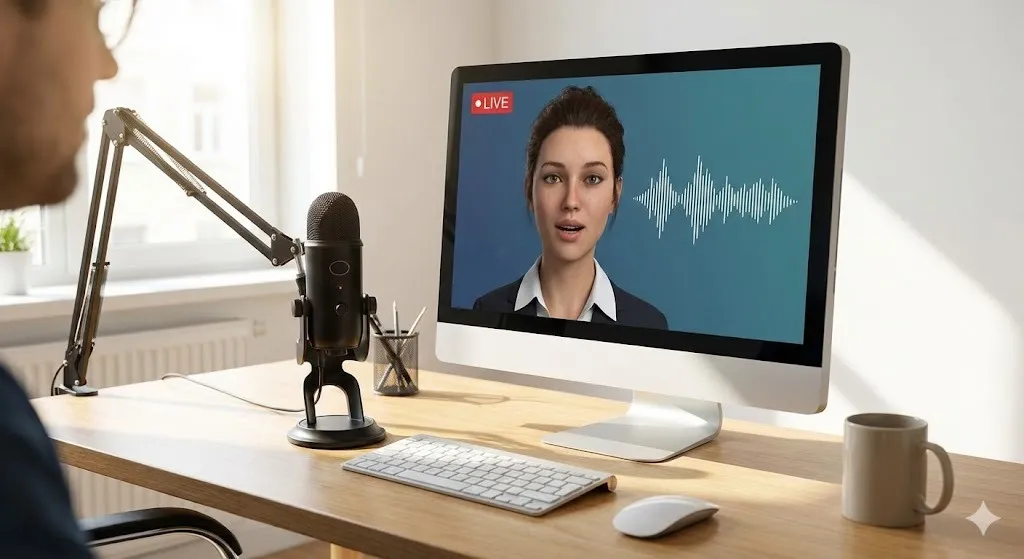
Alibaba partnered with major Chinese universities to create Live Avatar, a 14B diffusion model capable of generating real-time animated avatars.
Key breakthroughs:
- Streams 20+ FPS
- Instant response to voice
- Facial gestures & expressions
- 10,000+ seconds of streaming without quality loss
This solves the biggest problem in video generation: long-term stability.
🎥 Tencent Releases Hunyuan Video 1.5 — A Video Generator Anyone Can Run at Home
While the West focuses on Sora and Kling, Tencent delivered something far more practical.
Hunyuan Video 1.5 Features:
- Only 8.3B parameters
- Runs fast on consumer GPUs (e.g., RTX 4090)
- Generates 1080p upscales
- Supports text-to-video & image-to-video
For the first time, high-quality video generation is accessible to regular users, aiming to democratize creativity much like Prompt Engineering democratized coding.
🔥 Final Thoughts: The AI Arms Race Just Entered a New Phase
In one week:
- OpenAI hit Code Red
- Google pushed Gemini 3
- Anthropic hit $1B revenue
- Apple redefined retrieval
- Microsoft invented real-time speech
- Alibaba built infinite-length avatars
- Tencent released fast, accessible video generation
We are witnessing the fastest acceleration in AI history. If this pace continues, 2025 won’t be an evolution. It will be a reset of what AI can do.
Frequently Asked Questions (FAQ)
What is Project Garlic?
Project Garlic is a rumored internal OpenAI model designed to be more efficient and powerful than GPT-4, focusing on reasoning and coding tasks. It is reportedly being fast-tracked in response to Google’s Gemini 3.
Is Apple Clara available to the public?
Apple has released the research paper and some model weights for Clara (Continuous Latent Reasoning) on platforms like Hugging Face, primarily for researchers. It is not yet a consumer app feature.
Can I run Tencent’s Hunyuan Video on my PC?
Yes, Hunyuan Video 1.5 is optimized for consumer GPUs like the NVIDIA RTX 4090. Tencent released the training pipeline and ComfyUI integration, making it accessible for local AI enthusiasts.
How does Microsoft Vibe Voice compare to ElevenLabs?
While ElevenLabs offers superior voice cloning quality, Microsoft Vibe Voice focuses specifically on latency, achieving sub-300ms response times for real-time conversation, which is faster than most cloud-based APIs.
Written by Simple AI Guide Team
We are a team of AI enthusiasts and engineers dedicated to simplifying artificial intelligence for everyone. Our goal is to help you leverage AI tools to boost productivity and creativity.