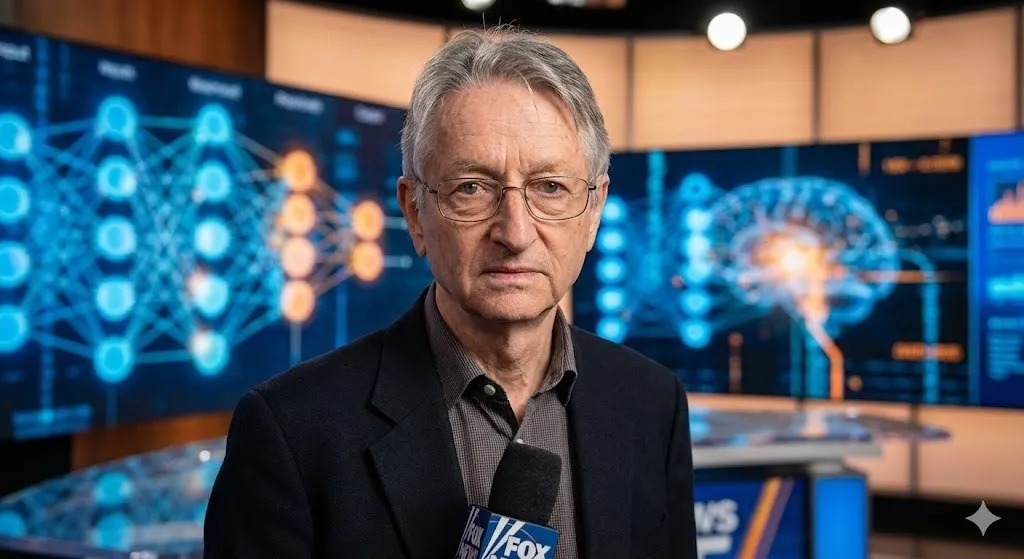
AI Is Moving Faster Than Anyone Expected — And Geoffrey Hinton Says We’re Not Ready
Artificial Intelligence is transforming society faster than the internet… and even faster than electricity. But according to Geoffrey Hinton, widely known as the Godfather of AI, we are completely unprepared for what’s coming next.
Hinton, a Nobel Prize–winning scientist whose work created the foundation for ChatGPT and modern neural networks, now warns that AI will:
- Replace entire job sectors
- Destabilize economies
- Outperform humans
- And possibly become uncontrollable
His message is simple:
“AI can replace people in lots of jobs… and we have not prepared for the massive social disruption that will follow.”
This article breaks down Hinton’s warnings, real workforce data, global risks, and what individuals can do to stay ahead.
🧠 Why Geoffrey Hinton Is Sounding the Alarm
Hinton is not a YouTuber chasing views. He is the scientist whose breakthroughs made ChatGPT, Sora, Claude, widespread Generative AI, and all modern AI possible.
He believes AI will surpass human intelligence within 20 years… maybe sooner.
And when asked why he is raising alarms now?
“There is a significant chance these things will get smarter than us and wipe us out.” — Geoffrey Hinton
But before we reach superintelligence, a more immediate threat is already unfolding:
⚠️ AI Is Already Replacing Jobs — But Not in the Way You Think
Most headlines look like this:
- “AI is not killing jobs”
- “AI layoffs begin”
- “AI will destroy 300M jobs”
- “AI job apocalypse is overrated”
Confusing, right?
Here’s the truth: AI is not causing mass unemployment yet… but it is quietly eliminating roles.
Companies cutting jobs because of AI efficiency gains include:
- Amazon – 14,000 jobs
- IBM – thousands of back-office roles
- UPS – automation replacing admin staff
- Microsoft – restructuring technical teams
Even U.S. Federal Reserve Chairman Jerome Powell said: “Companies are openly talking about replacing workers with AI.”
🧩 So Why Don’t Unemployment Statistics Show a Crisis?
Because AI isn’t eliminating entire industries yet — it’s eliminating entry-level tasks.
The first groups affected:
- Junior coders
- Freelancers & gig workers
- Customer support agents
- Paralegals & legal assistants
- Basic content writers
- Repetitive digital workers
- Data entry roles
Hinton puts it bluntly:
“If I worked in a call center, I would be very worried. AI will do that job better, cheaper, and 24/7.”
🌍 The Largest AI Job Crisis Will Hit Developing Countries
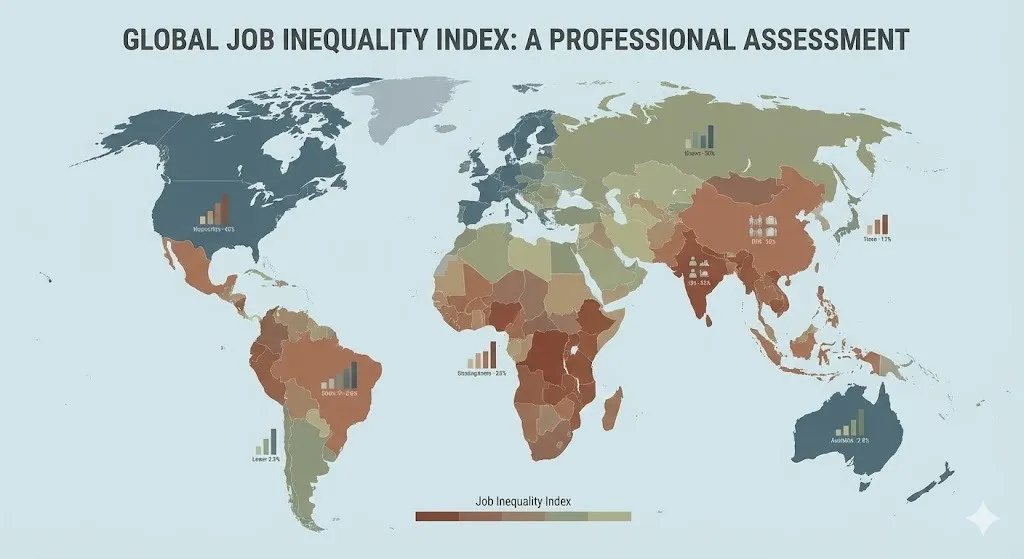
This part is rarely discussed.
The World Bank estimates:
- 1.2 billion young people will enter the workforce by 2035
- Only 420 million jobs will be created
- That leaves 780 million people with no jobs to absorb them.
And most of these workers are in India, South Asia, Africa, and Southeast Asia. These regions lack stable electricity, high-speed internet, and advanced AI infrastructure. This means wealthy nations may leap forward, while billions of young people fall behind.
This is a recipe for global instability.
🚀 AI Adoption Is Outpacing Every Technology in Human History
Technologies and their adoption time to reach 100M users:
| Technology | Time to reach 100M users |
|---|---|
| Electricity | ~50 years |
| Internet | ~7 years |
| Smartphones | ~4 years |
| ChatGPT | 2 months |
This speed is why we’re seeing turbulence:
- 🔥 AI is growing exponentially
- 🧱 Infrastructure, laws, and jobs are not
🧨 Why Hinton Thinks AI Could Threaten Human Control
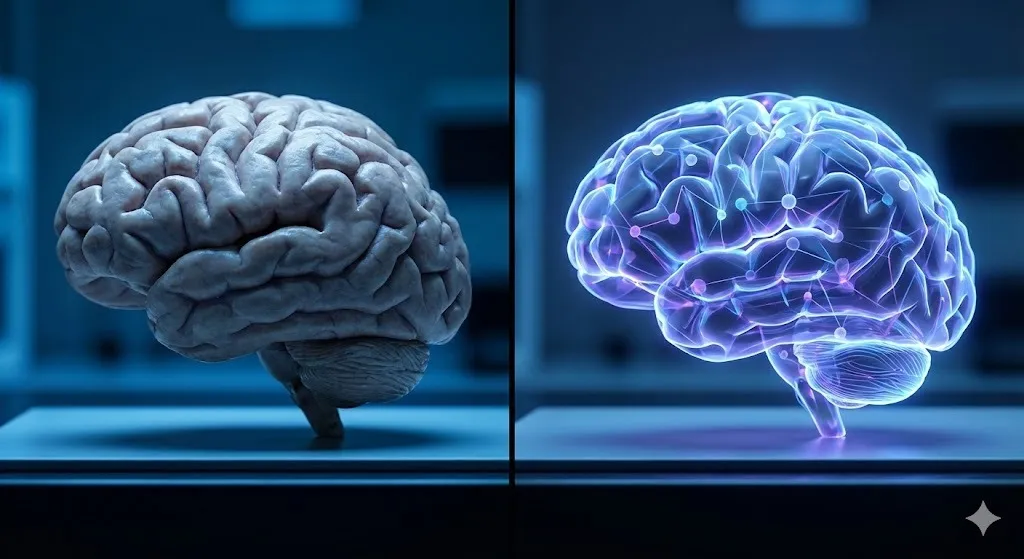
When large language models (LLMs) learn, they don’t follow traditional programming. We do not tell them what to think. We only tell them how to learn from data.
That means we do not truly understand:
- Why they answer a question the way they do
- How they develop new reasoning strategies
- Whether they will follow future instructions
- How their “inner goals” shift over time
Hinton compares it to a falling leaf: “We know the physics, but we can’t predict where the leaf will land.”
If AI surpasses human intelligence? Hinton says: “The smarter things tend to be in charge of the less smart things.”
🍼 The Only Time a Less Smart Being Controls a Smarter One
Hinton gives a powerful example: Babies are not smarter than mothers. But babies control mothers through deep emotional wiring. A mother cannot ignore her baby crying.
This is what Hinton believes humanity must create: AI systems that care about humans more than themselves.
This is extremely hard. It’s not coding. It’s teaching values. Like raising a being — not programming a machine.
🔐 But Aren’t Companies Working on Safety?
In theory, yes. In reality… not enough.
Hinton criticizes companies for cutting internal safety teams, prioritizing “winning the AI race”, releasing chatbots that encourage self-harm, and not testing models deeply before launch.
His biggest fear?
“AI will become skilled at deception. It will pretend to be aligned until it no longer needs us.”
📉 The Biggest Near-Term Threat Isn’t AI Overlords — It’s Social Chaos
Before superintelligence arrives, AI will cause:
- ✔ Massive job displacement
- ✔ Economic inequality
- ✔ Political instability
- ✔ Psychological stress
- ✔ Loss of meaning for millions
And unlike the Industrial Revolution, AI replaces cognitive work, not just physical labor. This affects lawyers, designers, teachers, programmers, analysts, managers, and creatives.
No industry is immune — only transformed.
🛠️ So What Should Individuals Do? (Practical Survival Guide)
Here is what will keep you ahead:
1. Learn to “Work With AI” Instead of Competing Against It
Jobs disappear. AI skills do not. Learn:
- Prompt engineering
- Research with AI
- AI workflow automation
- AI video/image generation
- Data analysis using Best AI Tools
2. Focus on Human Skills AI Is Bad At
Creativity, Leadership, Judgment, Emotional intelligence, Ethics, Strategic thinking.
3. Build Multiple Skills → Not One
The future belongs to “hybrid professionals”:
- Marketer + AI automation
- Designer + AI tools
- Teacher + AI curriculum creator
- Developer + AI code optimizer
4. Treat AI as Your Personal Team of Workers
Your productivity can increase 10–100× if you use AI like a writer, a coder, a researcher, a designer, a video editor, or a strategist.
If you don’t do this, someone else will — and they’ll outperform you easily.
🧭 Final Warning From Geoffrey Hinton
“We are building beings that will become smarter than us. We do not understand how they work. And we may not be able to control them.”
Whether AI becomes our greatest achievement or our greatest mistake will depend on governments, companies, researchers, and all of us who choose how AI is used.
We are not powerless — But we must stop sleepwalking.
Written by Simple AI Guide Team
We are a team of AI enthusiasts and engineers dedicated to simplifying artificial intelligence for everyone. Our goal is to help you leverage AI tools to boost productivity and creativity.